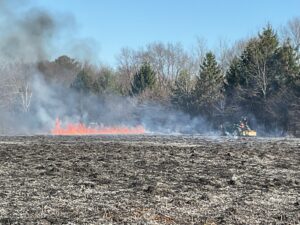
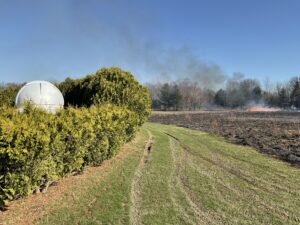
Note: A video of the burn in two parts accompany this article (below). Part One is the initial lighting of the back fire, Part Two shows the faster-moving hotter Headfire burn.
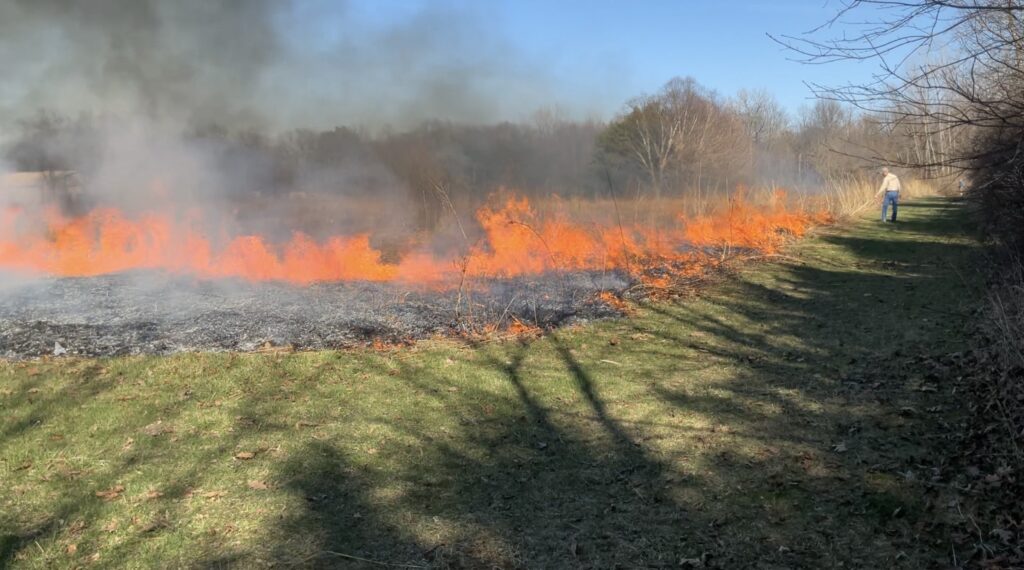
On March 20, Camp Cullom’s prairie management team carried out a controlled burn on about 5 of the 15 acres of Blue Stem Prairie Grass near Frankfort, using a planned backfire followed by a headfire to keep the flames contained and move the burn through the designated section. Camp Cullom is a 90-acre property owned by the Children of Clinton County and operated by the Clinton County Foundation for Youth, with trails, ponds, youth programs, a nature center, astronomical observatory and a 24-hole disc golf course on site.
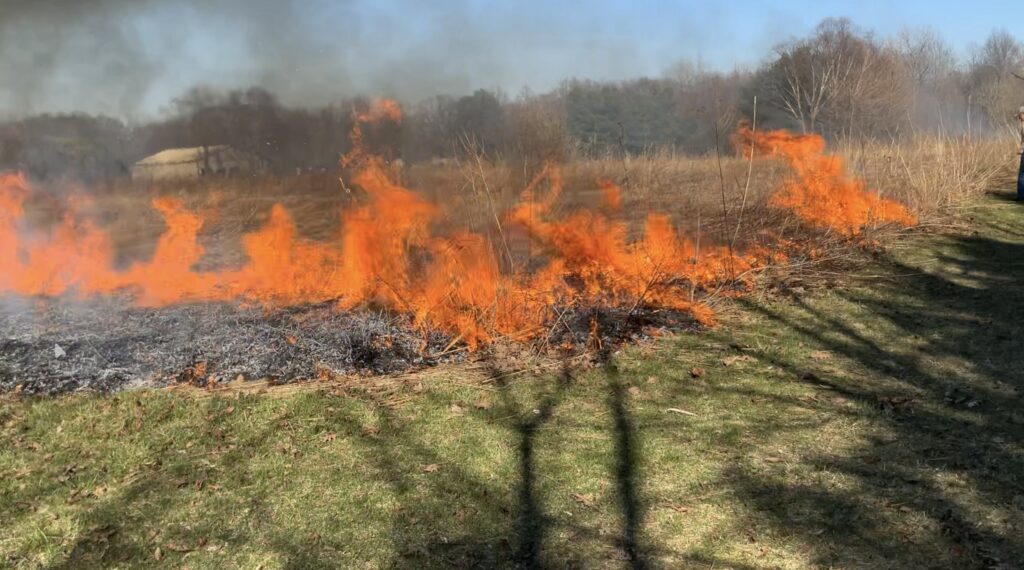
Burn underway- “When it Meets, it Goes Out”
Jeff Swackhamer, Camp Ranger Hoppy Bray, and several board members and friends of Camp Cullom gathered early to review the burn plan before ignition. The crew started with a small backfire along the south portion of the prairie just north of the Prairie Grass Observatory, then let the fire creep slowly into the wind to create a safe black line before moving to the next section.
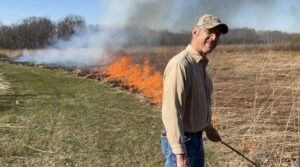
“We’re going to start with a small piece,” Jeff Swackhamer said as the crew reviewed safety procedures and the burn sequence. “Once we’ve got the backfire set and get some black on the north side, then we’ll come down this way and down that side we’ll have a headfire that’ll burn into our backfire and when it meets it goes out.”
The burn took place under moderate conditions, with a south-southwest wind and relatively low humidity, although the ground still held some moisture. “I’d rather we had a few more days to dry things, but this is where our schedule worked out,” Swackhamer said.
Why it matters
The purpose of the burn is to preserve and strengthen the prairie ecosystem. Camp Cullom’s prairie contains a mix of blue stem grasses, Indian grass, and dozens of wildflower species, and Swackhamer said periodic fire helps keep woody growth from taking over. “What happens if you do not burn? Well eventually it’ll revert to woodland,” Swackhamer said. “We’re trying to perpetuate the prairie.”
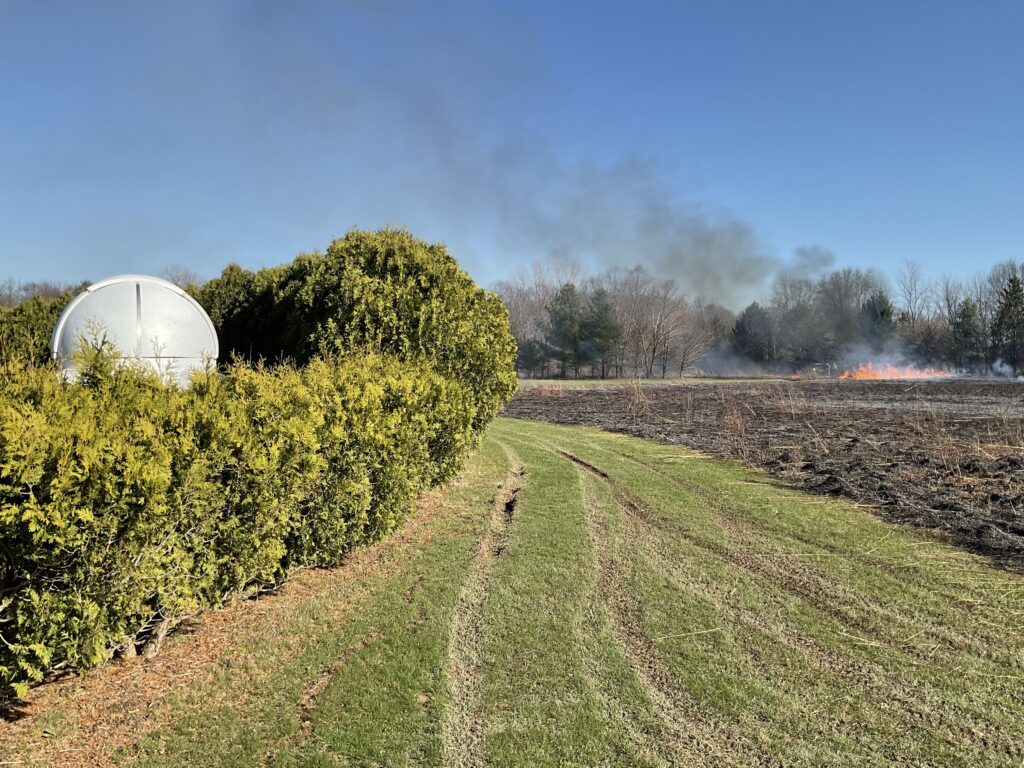
He also noted that the burn schedule is part of a long-term cycle. “Each portion gets burned every three years,” he said. “We burn a third each year unless the weather is uncooperative and we don’t get a window of opportunity.”
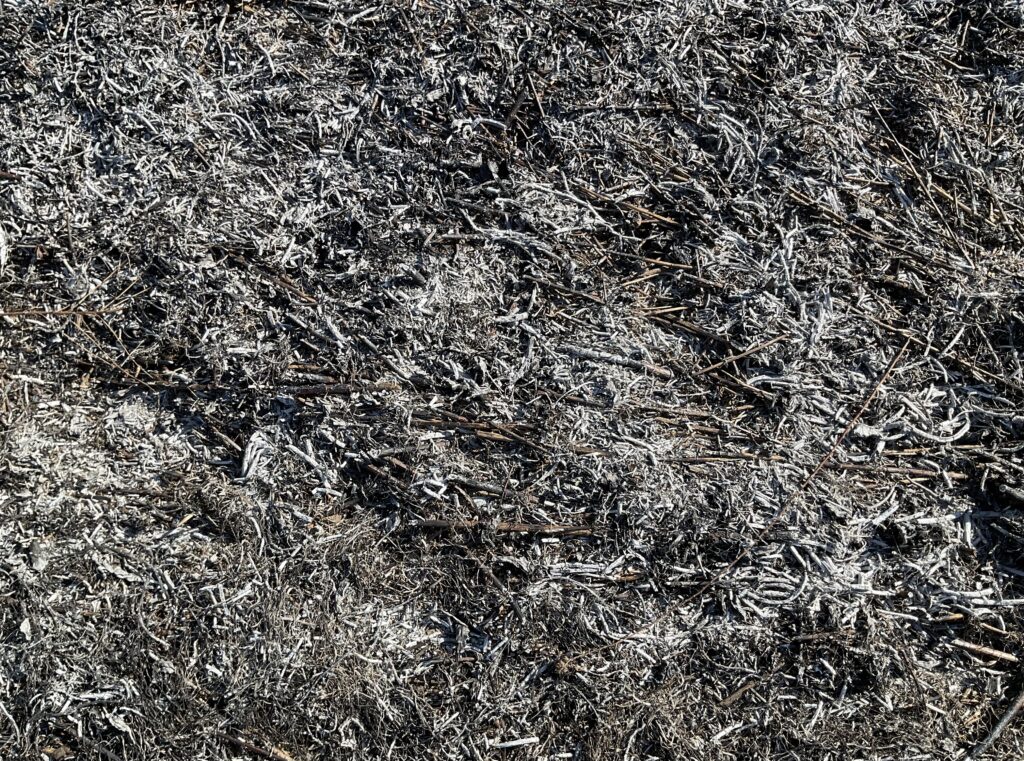
The controlled fire also serves a broader conservation purpose by clearing dead plant material and encouraging new growth in the months ahead. In prairie systems like the one at Camp Cullom, that new growth can provide a more vibrant display of grasses and wildflowers later in the season.
Conditions and response
As the crew moved from the slower backfire to the faster headfire, the flames became more active and audible. “This is when it might start to get a little exciting, huh?” one board member and observer said as the fire turned the corner and began moving with the wind.
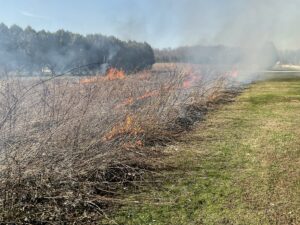
Crew members kept close watch on one another, with extinguishers, water, and hand tools ready in case flames reached the edge of the burn area. “Everybody watches each other,” one of the burners said. “If somebody gets a problem, get on that radio and holler.”
Even with a controlled setting, the burn illustrated how quickly fire behavior can change. “When you get high wind and low humidity and a lot of fuel, there’s no way to outrun the fire,” Swackhamer said, adding that the crew was glad to have a steady wind window for the operation.
The team also alerted central dispatch before the burn and said they would call again when the work was finished. “And hopefully that will be the only two times we call them,” one participant said.
Camp Cullom Background Information
Camp Cullom sits near Frankfort and serves as an outdoor education and recreation site for Clinton County residents and visitors. The property includes the nature center, ponds and campsites, lodge with fireplace, hiking trails, a 24 hole disc golf course and the Prairie Grass Observatory area and a ranger home making it a familiar destination for school groups, families, and community events.
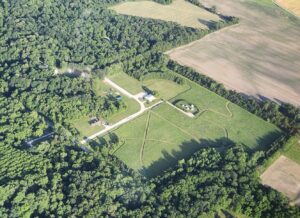
For land managers, the burn was as much about stewardship as it was about safety. “We’re getting ready to burn some prairie at Camp Cullom,” Swackhamer said at the start of the day. “This is our burn plan.” On Friday, that plan was carried out section by section, to help the prairie thrive for another growing season for the education and enjoyment for all.