
Clinton County EMS Executive Director Stephen Deckard says local emergency agencies will spend the next two years building and drilling a single, countywide response plan for school active-threat incidents, calling it a necessary step to save lives. He said representatives from all school corporations and first-responder agencies are set to meet in March to begin writing a unified protocol for every campus in the county.
Schools in the County are Clinton Prairie, Clinton Central, Frankfort Community Schools, Rossville and The Crossing.
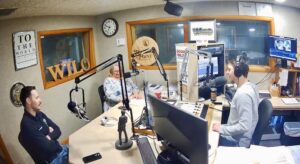
Deckard told WILO and Boone 102.7 FM’s “Party Line” that while Clinton County’s fire, police and EMS agencies train regularly on their own, they do not yet have a fully organized, shared response playbook if an active shooter or other violent threat occurs at a school. “Right now, if the tones drop for an active threat, we don’t have a true organized response,” he said. “Are we going to figure it out? Yeah. But could it be better? Yes. And it needs to be.”
He said EMS, central dispatch, the Clinton County Sheriff’s Office, Frankfort Police and Fire, and all school corporations will begin meeting this spring to build a single standard operating procedure for each school, with the goal of having a “really strong structure by the end of ’26” and then drilling it repeatedly. “We owe it to the children, we owe it to the faculty, and we owe it to the rest of our community that we are prepared for those situations,” Deckard said.
Building a countywide school response plan
Deckard said recent large-scale training exercises showed that tabletop discussions are not enough to prepare responders for a fast-moving, high-stress school emergency. “You can sit at a circle table and say, ‘If this were to happen, this is how we would respond,’ and then you show up on a scene where that is reality and you get kicked in the teeth,” he said.
He warned that without shared procedures and communication plans among dispatchers, police, fire and EMS, “chaos ensues” when multiple agencies converge on the same school. The unified plan, he said, is intended both to reduce casualties and to limit legal exposure for the county by ensuring responses are grounded in evidence-based medicine and preplanned coordination.
Deckard said he wants agencies to drill the new plan repeatedly once it is in place. “The goal is for us to have a really strong structure by the end of ’26,” he said. “Then we’ll drill it until we are tired of drilling it, but we are really confident in calling our response.”
Odd winter, higher-acuity calls
Beyond school safety planning, Deckard described an “odd season” for EMS call volume so far this winter. He said this time of year is typically “peak sepsis season,” and crews are seeing their usual share of serious infections along with what he called a “significant number” of cardiac arrests in recent weeks.
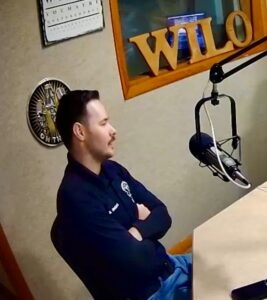
While some might link the spike to cold weather and snow, Deckard said the causes are likely more complex, including an aging population, multiple chronic health conditions and long-running access issues in rural healthcare. He said the COVID-19 pandemic disrupted preventive care and timely access in ways communities are “still trying to play catch up” on.
Hospitals in the region are also strained, Deckard said, noting frequent diversion, bed holds and busy emergency departments that can complicate EMS transports.
Preventive care and patient advocacy
Deckard urged residents to focus on well-established preventive care rather than chasing every new test marketed online or on television. He pointed to “annual labs, monitoring your blood pressure, monitoring your blood glucose, getting colonoscopies when they’re recommended, and doing your best to stay active and socially engaged” as measures proven to prolong health.
At the same time, Deckard encouraged patients to educate themselves and advocate when something feels wrong, especially younger adults who can be dismissed. He described cases in which people in their early 20s came to an emergency room with shortness of breath, were told it was anxiety and sent home, only to return in cardiac arrest due to a pulmonary embolism. “Statistically, it’s unlikely,” he said of serious conditions in younger patients. “However, it can still happen.”
Deckard said more-informed patients can push for appropriate testing and second opinions, but he stressed the need to understand what they are asking for and to rely on evidence-based guidance.
Paramedic program grows, standards remain high
Deckard also highlighted the growth of Clinton County EMS’s paramedic training program, which is now in its third cohort. The second class, dubbed the “Fantastic Four,” finished coursework December 31 and celebrated a recent graduation hosted by Purdue University in its football press box.
National standards expect about 70 percent of paramedic students to finish and about 70 percent of those to pass the certification exam, but Deckard said the local program intentionally sets the bar higher. “If we’re going to sign off on these providers, we need to know that they are going to be quality, competent providers,” he said, noting last year’s class started with eight students and graduated four.
Clinton County EMS is currently training 13 students in its third cohort after one withdrew for medical reasons. Deckard said the program’s instructors prepare extensively beyond publisher-provided slides and test banks, and he encourages faculty to admit when they do not know an answer and look it up with students. “I think the most powerful statement an instructor can have is saying, ‘I don’t know,’ and stopping and saying, ‘We’re going to figure it out together,’” he said.
He added that the service is in “the best place we’ve been” since he took the director role, with consistent staffing, regular training and the prospect of being “paramedic heavy” by the end of the year if current students finish on schedule.
——————————————————————————————-
Party Line on WILO 96.9 FM, WILO 1570 AM and Boone 102.7 FM has been a favorite of the area since it began on WILO AM 1570 66 years ago. Party Line has three open phone lines for listener participation and is also broadcast LIVE and WORLD-WIDE daily and available on demand at HoosierlandTV.com. Over 17,000 programs on the radio station have strived to inform and entertain the area and solve problems in North Central Indiana, involving listener input and informed guests. Party Line Talk Show hosts are Cindy Loveless, Melissa Miller and Shan Sheridan. Sam Wort is back up host for the program. Party Line is produced by Dacen Brittain or Sam Wort. WILO serves Clinton, Carroll and Boone County.