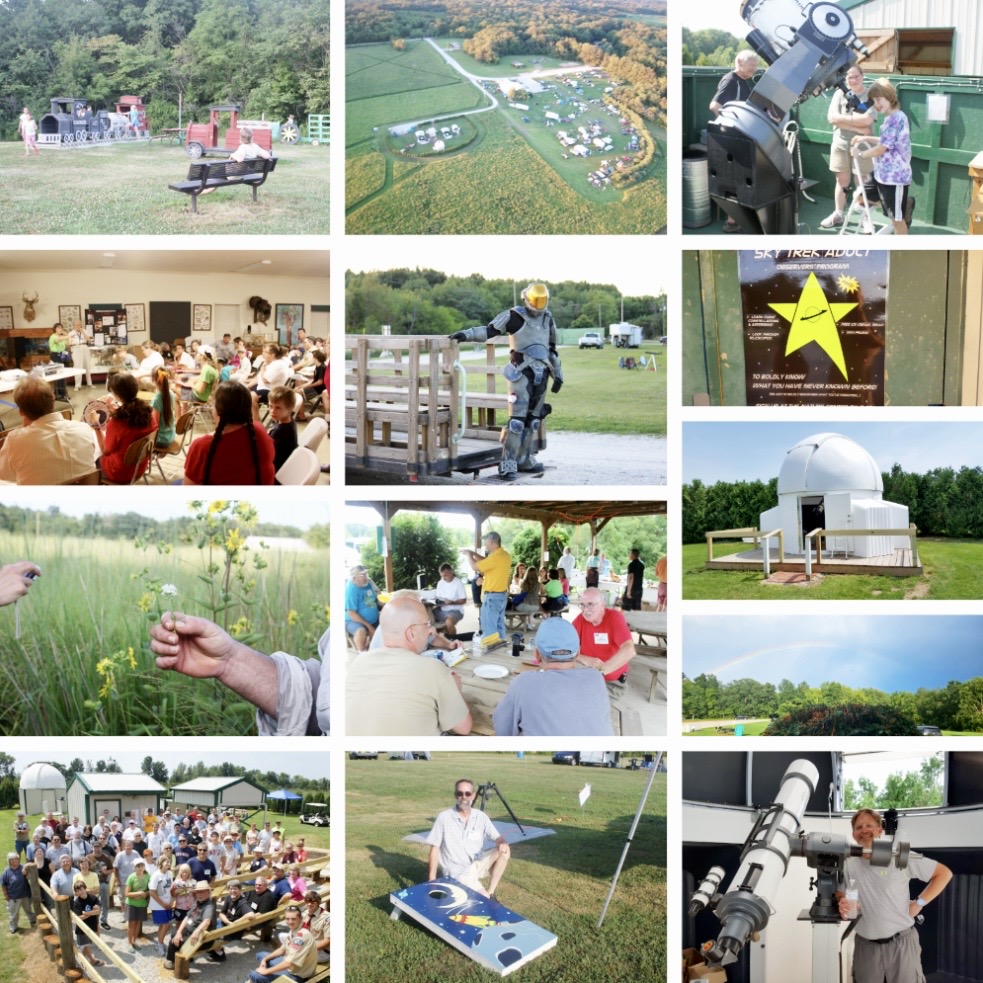
Families across central Indiana will have a chance to explore the night sky during the 23rd annual Indiana Family Star Party, set for August 7 and 8 at Camp Cullom near Frankfort.
The event, known as the Midwest’s premier family-focused star party, invites visitors to experience dark rural skies, view star clusters and galaxies, and learn constellations alongside amateur and professional astronomers. Telescopes from Prairie Grass Observatory and visiting astronomers will be available for public viewing, with permission from equipment owners.
Activities begin Friday evening with gates opening at 4:00 p.m. An ice cream social at 6:30 p.m. at the Nature Center will be followed by an orientation roundtable at 7:00 p.m. The evening also includes the Sky Trekker Lite and Sky Trek Adult Lite programs, with an 8:00 p.m. launch meeting in the air-conditioned Camp Cullom Lodge and a 10:10 p.m. session at the Galileo Gallery. Participants will reconvene indoors if weather conditions require.
Earlier Friday activities include a swap meet from 11:30 a.m. to noon, solar observing from 2:00 to 4:00 p.m., and another swap meet from 6:00 to 7:00 p.m. A Beginning Astronomy Workshop will be held at 8:30 p.m., and movies begin at 10:00 p.m. in the Nature Center.
Saturday events begin with gates opening at 10:00 a.m.
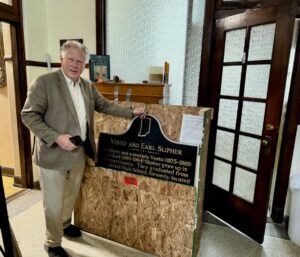
A highlight of the day will be an 11:30 a.m. ceremony dedicating a new Indiana State Historical Marker honoring the Slipher brothers, natives of Mulberry and Indiana University graduates who made significant contributions to astronomy and astrophotography at Lowell Observatory in Arizona. The Mayor of Frankfort, Judy Sheets, Tom Borlik, Historian from Goethe Link Observatroy and Indiana Astronomical Society, Kevin Schindler, Historian from Lowell Observatory in Flagstaff, Arizona and several members of the Slipher Family plan to attend the ceremony. The Ceremony will be broadcast LIVE and World-wide and archived at HoosierlandTV.
2026 Star Party Speakers include:

Kevin Parsons – James Webb Telescope, Behind the Golden Mirror
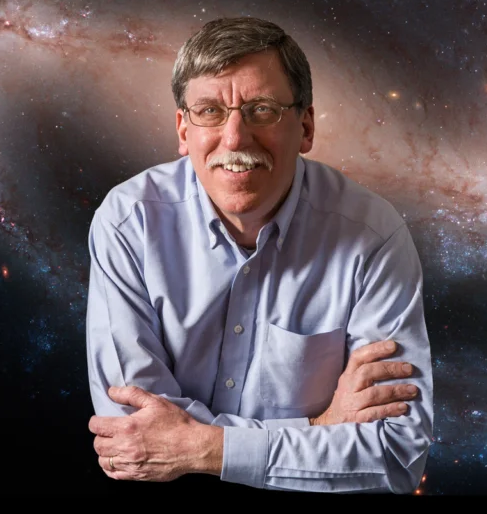
Kevin is an Associate Professor of Engineering Practice at Purdue University having graduated from MIT. His knowledge about areo and space engineering has him working with the Space Telescope Science Institute (STScI) on Hubble!
Kevin will give an insider’s perspective on building the world’s most powerful space telescope.
His work has resulted in some of Hubble’s — and astronomy’s — most iconic images, including the “Bubble Nebula” (NGC 7635), the Carina Nebula mosaic, and the return to the Eagle Nebula’s “Pillars of Creation” in 2015, as well as the Hubble Deep Field.
Zolt became interested in astronomy and photography at an early age and earned a bachelor’s degree in astrophysics at Indiana University, Bloomington, and a master’s degree in astronomy at Case Western Reserve University in Cleveland, Ohio. He worked with several space science missions at NASA’s Goddard Space Flight Center in Greenbelt, Maryland, before joining the Space Telescope Science Institute in 1983.Zolt will cover both his personal and professional experiences… This should be a very interesting presentation!

Caty Pilachowski – 250 years of American astronomy
Caty Pilachowski has been excited about astronomy since she was a child. After graduating with a bachelor’s degree in physics from Harvey Mudd College in California, she attended graduate school at the University of Hawaii, attracted not by the beaches but by the opportunity to use the magnificent telescopes on Mauna Kea to learn about the Universe. She worked at the national observatory in Tucson for 20 years before joining the IU faculty in 2001 as the Daniel Kirkwood Chair in Astronomy. She is currently a Distinguished Professor and Chair of the Department of Astronomy at Indiana University.
Caty studies the chemical evolution of stars and stellar populations, specifically how the compositions of different populations of stars differ from each other due to different histories of star formation. She especially enjoys sharing the excitement of astronomy with students and the public.
Abstract:
Astronomy has played an important role in America since before the founding of our country 250 years ago. Caty will explore the contributions of American astronomers (and Indiana astronomers!) in the 19th and 20th centuries, and the unique combination of our history, geography, and cultures that brought us to the present place of American astronomy in the world. The 20th century was a “golden age” of American astronomy as we learned about the evolution of stars, the Big Bang and the evolution of the Universe, black holes, dark matter and dark energy, and worlds around other stars. The 21st century also offers great promise, with ongoing discoveries from the James Webb Space Telescope and the pending flood of data from the Vera Rubin telescope, the soon-to-launch Nancy Grace Roman Space Telescope, and giant, ground-based telescopes under construction.
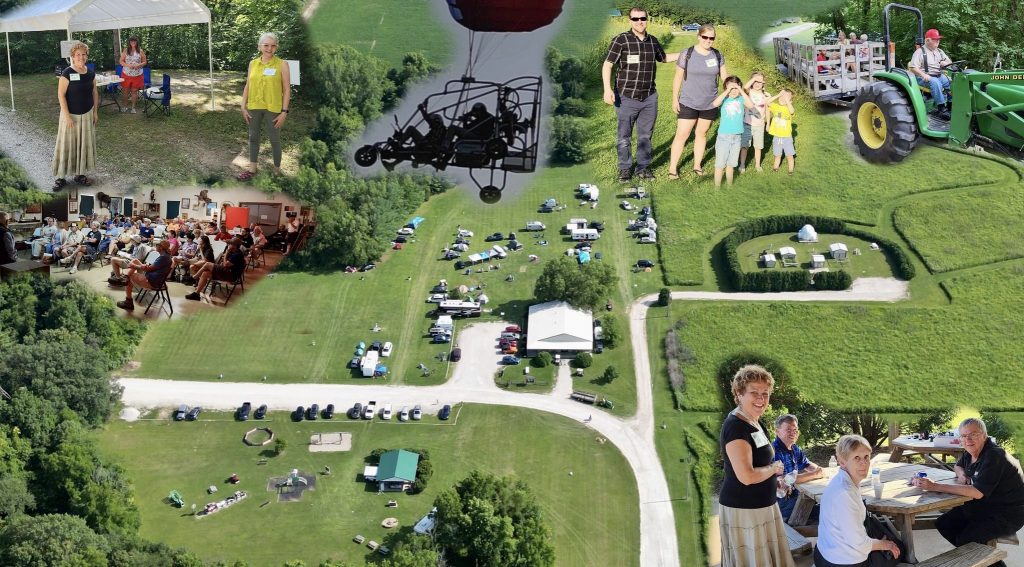
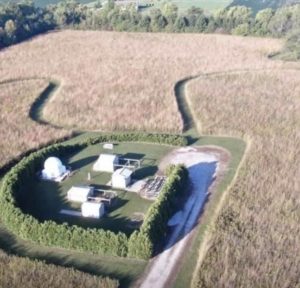
Additional Saturday activities include the Astro Quiz at 10:30 a.m., a swap meet from 11:00 to 11:30 a.m., silent auction entry beginning at 12:30 p.m., and astronomy presentations starting at 1:00 p.m. Evening events include quiz awards and door prizes at 6:00 p.m. and a prairie grass habitat walk at 7:30 p.m. Nighttime programming continues with a Beginning Astronomy Workshop at 8:30 p.m. and movies at 10:00 p.m.
Throughout both evenings, attendees can observe celestial highlights including star clusters, nebulae, galaxies, and potentially bright meteors as the Perseid meteor shower approaches its peak. Saturn and its rings are expected to be visible after 12:30 a.m.
Public admission is $5 per person or $15 per vehicle for three or more people per day. This covers unlimited hot chocolate and coffee, ice cream social, speakers, space movies, popcorn, tours, solar and star viewing and more. Food can be purchased on-site at the Astro Grill manned by American Porkers. Gates remain open until midnight each night, though they may close earlier due to weather. Visitors may stay later, but shuttle service to the parking area ends at midnight.
Parking for single-day attendees is located a few hundred yards from the observing field, with hay wagon transportation available until midnight to minimize light interference. Those bringing telescopes may transport equipment via wagon or vehicle during daylight hours. Golf Cart shuttles are powered by Deer Track Golf Course.
For those wanting an extended experience, full-event camping is available August 4 through 9. Registration after July 20 is $50 per individual or $60 per family. Campers may stay on the observing field or designated campsites, but vehicles must be moved off the field before dark unless a full-event pass is purchased.
Amenities include prepared food available beginning Friday afternoon, restroom and shower facilities, and air-conditioned buildings including the Nature Center and Lodge. Movies with free popcorn will be shown both nights.
Event organizers remind attendees that no alcoholic beverages are allowed. Generator use is restricted to noon through 8:00 p.m., and walkie-talkie channel 11 is reserved for staff.
The Indiana Family Star Party is hosted by the Wabash Valley Astronomical Society, Indiana Astronomical Society, and Muncie Astronomy Club. Proceeds support the Prairie Grass Observatory and Camp Cullom, a Clinton County Foundation for Youth facility and United Way agency.
Camp Cullom is located at 6815 W Co Rd 200 N, Frankfort Indiana 46041. Camp Cullom is in northwestern Clinton County on 200 North between Jefferson and Mulberry Indiana under dark rural skies. Clinton County maintains a lighting ordinance to protect the dark skies so future generations can enjoy the stars.
More information and registration details are available at indianastars.com or by contacting the Wabash Valley Astronomical Society.