
Imagine a teacher collapsing in the middle of a lesson. Students look up from their desks. The room falls silent. In the next few moments, knowing how to summon help and where to find lifesaving equipment could make all the difference.
Rossville Schools is preparing students and staff for that possibility through a new Classroom Medical Emergency Response Drill procedure, adding practiced responses to an already substantial investment in lifesaving training and equipment.
At Rossville Schools, almost every staff member is trained in cardiopulmonary resuscitation, or CPR. Mr. Stephen Back, a certified CPR instructor, is currently teaching CPR to eighth-grade students, while most students in grades 9 through 12 have already received CPR training. Meanwhile, 26 automated external defibrillators, commonly called AEDs, are strategically located throughout the school building and grounds. Together, staff and student training, accessible lifesaving equipment, and the new classroom drills demonstrate Rossville’s leadership in medical emergency preparedness among area schools.
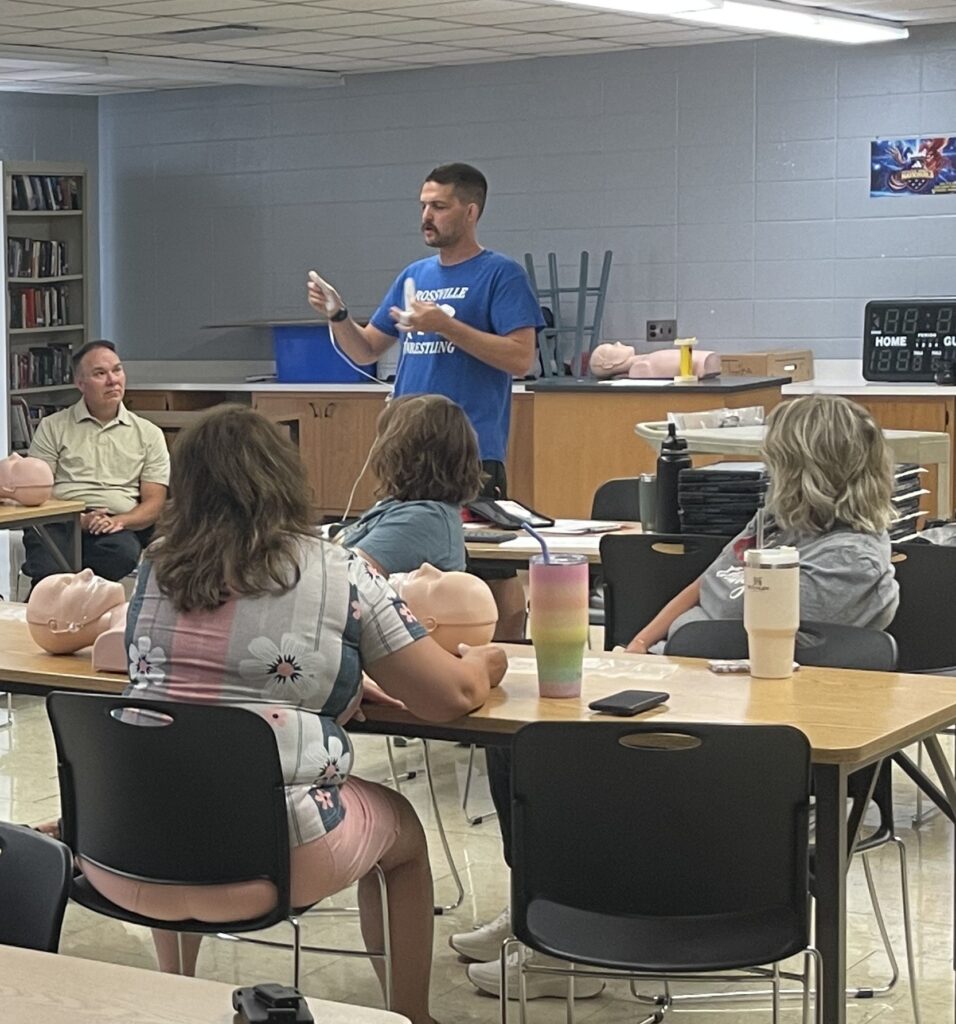
Beginning after October 1, 2026, School Resource Officers Tommy Dillingham and Mitch Cottrell will lead the classroom drills. A parent notice from Superintendent Dr. James Hanna explains that the exercises will help students and staff respond calmly and appropriately during a classroom medical emergency.
Before participating, students will receive age-appropriate instruction from their teachers. They will learn where the nearest AED is, how to activate the school’s emergency response system, and when and how to call 911 if an emergency occurs outside school. Teachers will emphasize remaining calm, following directions, and seeking help from an adult.
Each teacher will also identify a “buddy teacher” who can supervise students, summon additional assistance or support the classroom during an emergency. The arrangement helps coordinate care and classroom supervision when immediate action is needed.
Government health guidance underscores why those preparations matter.
The National Heart, Lung, and Blood Institute reports that nine out of 10 people who experience cardiac arrest outside a hospital die, often within minutes. Cardiac arrest occurs when the heart suddenly stops pumping blood to the brain and other vital organs. Calling 911, providing immediate CPR and using an AED can save a life.
The Centers for Disease Control and Prevention reports that CPR performed in the first few minutes of cardiac arrest can double or triple a person’s chance of survival.
Rossville’s combination of widespread staff training, strategically placed AEDs, and classroom preparation aligns with CDC recommendations for school cardiac emergency response plans. Those recommendations include expanding training to all staff, clearly marking accessible AEDs, and conducting drills at least annually to improve communication and coordinated response. CDC advises placing devices so they are available for use within three to five minutes of sudden cardiac arrest.
Indiana Department of Education guidance encourages schools to use a three-minute response goal when planning AED locations, including access for indoor and outdoor activities. It also recommends equipment maintenance, clear signage, and drills that help staff understand their responsibilities.
Rossville’s School Safety Committee meets quarterly to review procedures and gather input. Parents and community members are encouraged to share questions, concerns, and suggestions.
The new drills bring that ongoing work into the classroom, helping students and staff rehearse the decisions that matter most when an ordinary school day becomes a medical emergency.