Indiana Attorney General outreach representative Janice McHenry urged Hoosiers to slow down, verify unsolicited contacts and closely monitor bank and credit card statements, saying scammers often rely on urgency, curiosity and small test charges to slip past victims. She also highlighted the state’s consumer complaint system and unclaimed property program during the local presentation.
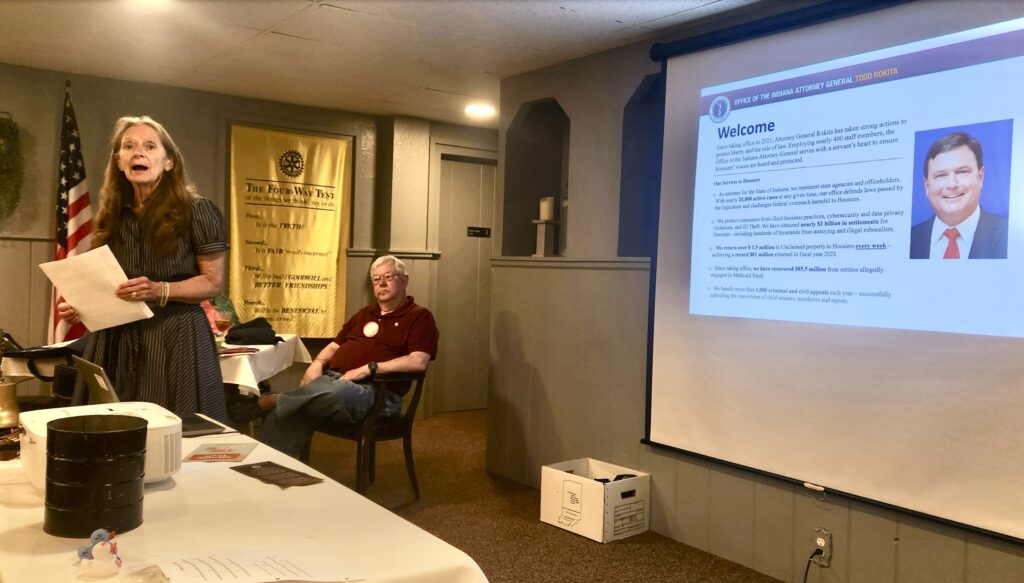
Hoosiers should be wary of pressure tactics, suspicious links and even small unexplained charges on bank or credit card statements, Indiana Attorney General outreach representative Janice McHenry told the Frankfort Rotary Club during a recent program on scams and fraud.
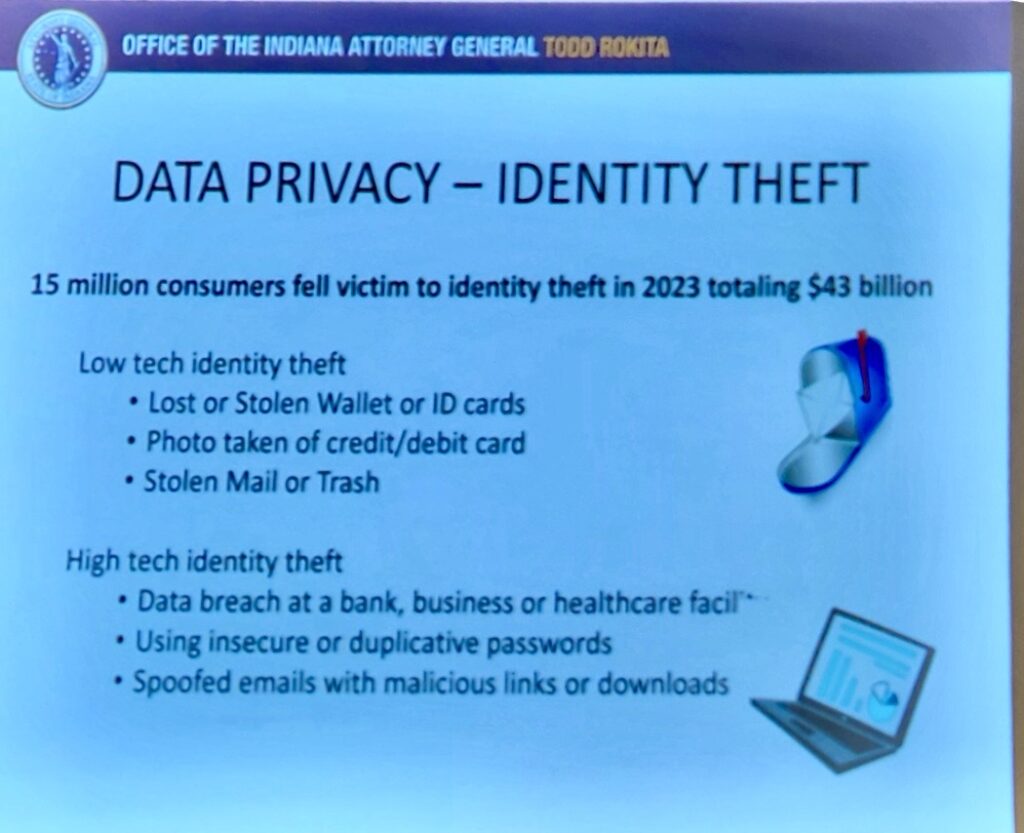
The presentation focused on practical steps residents can take to avoid becoming victims of identity theft, phone scams, fake charities and contractor fraud. McHenry said one of the most important habits is carefully reviewing financial statements, because scammers may first test whether an account is active with a very small purchase. “Always watch your credit card statements carefully,” McHenry said. “If you see a discrepancy, contact your credit card immediately.”
Complaint process and consumer role
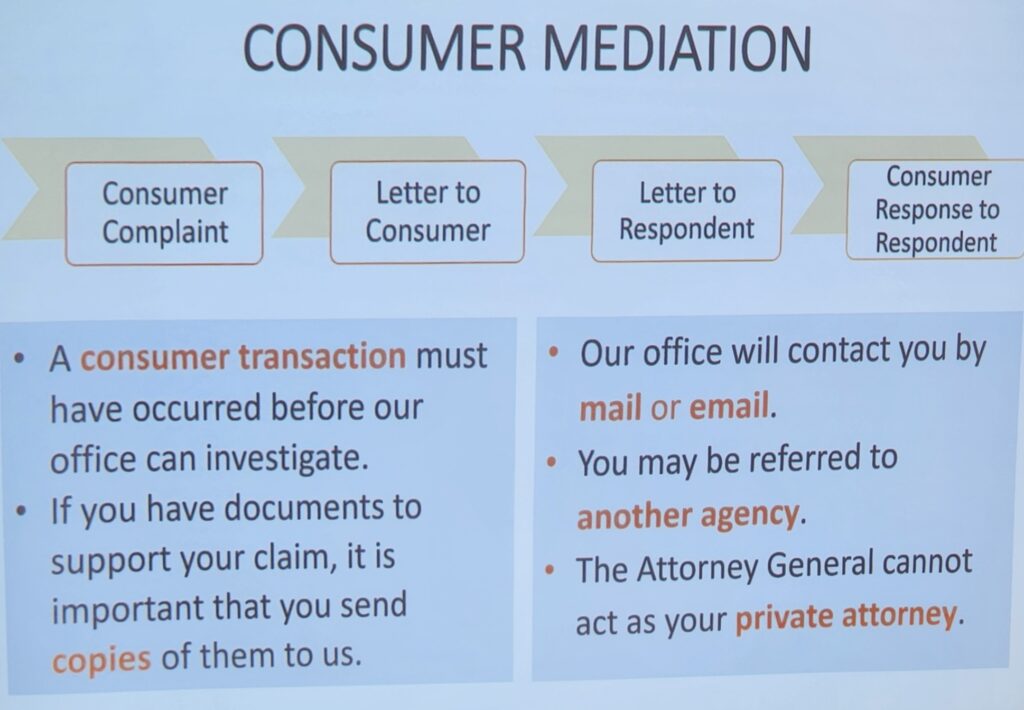
The talk also served as an overview of the Indiana Attorney General’s office, which McHenry said handles consumer protection, Medicaid fraud enforcement and the return of unclaimed property. The Attorney General’s Consumer Protection Division says it mediates and investigates complaints involving businesses, schemes and scams, and Indiana residents can file complaints through the office’s online system.
McHenry said the office cannot open an investigation based only on suspicion. “Our office can’t investigate on a gut feeling — there must be a transaction,” she said, encouraging residents to trust their instincts before agreeing to do business with someone. She added that residents should keep original records and provide copies of documents when filing complaints.
McHenry also pointed Hoosiers to the state’s unclaimed property program, noting that returning money to rightful owners is another major part of the office’s work. Indiana officials said the Unclaimed Property Division set a record by returning $88 million in 2025, and a May 2026 state update said more than $56 million had already been returned this year.
Common scams and warning signs
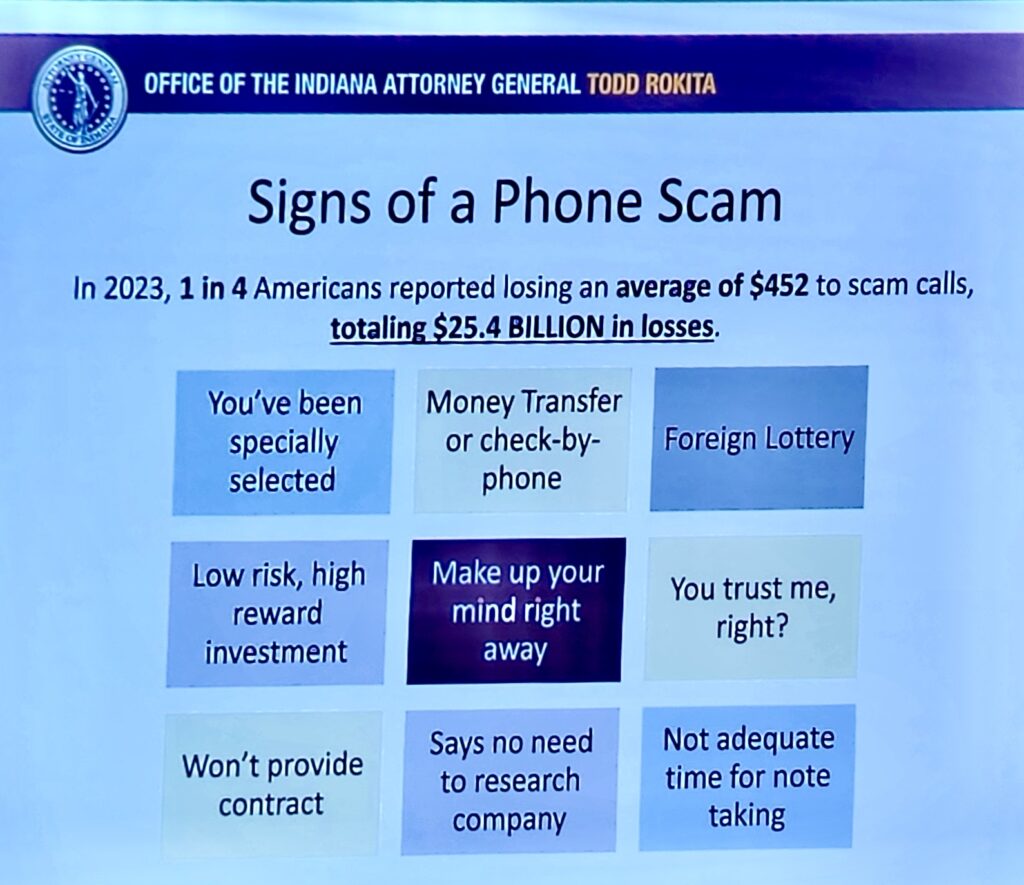
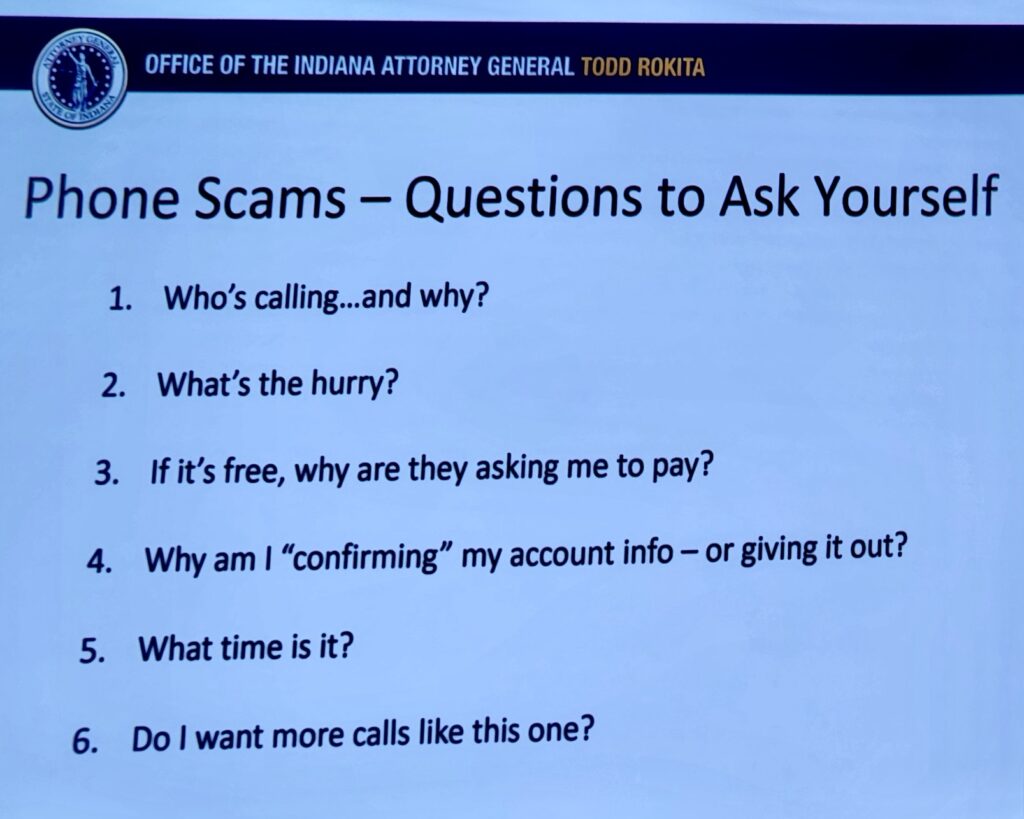
Much of McHenry’s presentation centered on how scammers try to create confusion or panic. She warned against clicking links in emails or text messages that appear to come from banks, Amazon or other familiar companies, saying residents should instead contact the company directly using a known phone number or website. “Never click on a link unless you’re 110% certain of where it came from,” McHenry said. She added that scammers often “bank on your curiosity,” using messages designed to make people act before thinking.
McHenry described common fraud schemes involving
- prize offers,
- low-cost travel packages,
- health products,
- investment pitches and
- “recovery scams” aimed at people who have already lost money.
- Grandparent Scams
McHenry said requests for wire transfers or gift cards should be treated as major warning signs. “If it sounds too good to be true, it probably is,” she said. For older residents and families, she said so-called grandparent scams remain a concern. In those cases, callers may pretend to be a relative in trouble and ask for immediate help while insisting the matter be kept secret. McHenry urged listeners to stop, verify the story independently and contact relatives directly before sending money.
Local takeaway
McHenry said residents should be especially cautious when they are busy, distracted or caught off guard, because that is when many scam calls and messages arrive. “Most scammers do not leave voice messages,” she said, advising people to let unfamiliar calls go to voicemail and respond only after confirming the caller is legitimate.
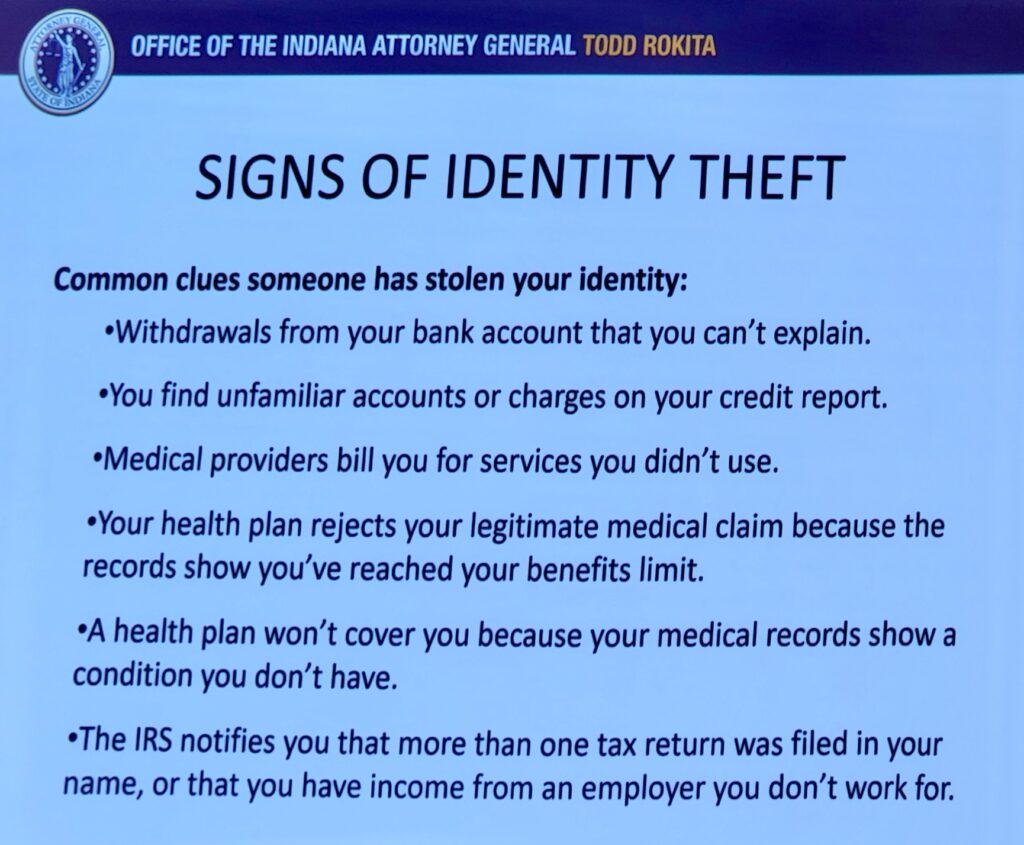
McHenry encouraged residents to use strong passwords, avoid carrying unnecessary personal information and watch for identity theft involving medical bills or tax filings. For local residents, the main message was simple: slow down, check the source and do not let urgency override common sense. Indiana’s Attorney General office says complaint forms and consumer protection resources are available online through its Consumer Protection Division.